I'm not sure why I haven't chosen to write about this before. It's a
sob story I find myself having to rehash and revisit with surprising
frequency, but never in full. It only ever comes up in the kind of situations when you find you would never want to explain the whole situation.
I frequently write about things that I do, but I very rarely write about things that I am.
What I am is someone who has a monster sitting on my shoulders. My
migraines are not just something that show up every once in a while,
they are a disease. Every disease has a unique personality, like beasts
in a menagerie. Migraine is a creature, a black, hairy, hulking golem
that sits, literally, on your shoulder and waits for any misstep.
There
are all kinds of ways to make all kinds of diseases rancorous and
spiteful against you. Arthritis hates the common movement of your
joints. Epilepsy sometimes hates the flickering lights of movies and
clubs. Heartburn and diabetes hate to see you let down your guard about
what and when you eat.
Migraine is incredibly touchy, and
almost completely unpredictable. It's triggers change and keep
snowballing over time. And it's unbiased in its hatred. It becomes angry
if you get too much or not enough sleep, if you are dehydrated, if the
air is too humid or too dry, too hot or too cold, if the light is too
bright or the sound too loud. It lashes out if you have too much
caffeine, MSG, or aspartame. If you have been on an airplane. If you're
stressed out. If it's been too long since you've eaten or if you eat too
much. If your hormones are off balance. If you sit in one position for
too long. If you exercise too hard. If you stand up too fast. If you
smell natural gas. If you cry.
And perhaps predictably, the evil little bastard becomes completely enraged when I drink.
I, and many, many other people like me, spend thousands of
dollars a year trying to soothe and tame this disease. Once every couple
of months I commute about an hour out to my neurologist's office to
tell her how things are going and see what's working and what we can
try, and to get refills on the five or six prescriptions I have to keep
things in line. Though I am fortunate to live near one of the only clinics specializing in migraines in the entire United States,
I'm not always happy with how my visit goes, because basically, there's
still not a lot that people know about migraines. It's a disease of the
nervous system and most of the available drugs were actually designed
for other uses. The usual advice is, in general, be vigilant. Watch
everything your body does vigilantly.
And the thing I find it most difficult to be vigilant about is not drinking.
The problem is, I love drinking. I love it passionately.
As I said, the things that set the creature snapping and snarling change
and evolve over time. I've never been able to drink red wine. Many
people can't. And it's no sacrifice. It's not the sacrifice. But I
would, if given the chance, be the sort of person who had a couple of
gin and tonics every other night with dinner. I had been waiting to get a
big enough apartment to start brewing my own cider. Mimosas and good bloody marys make brunch brunch. Tequila is... there aren't even words for what tequila is. It's beautiful.
But beyond the fact that a rum and coke without rum is just... coke: alcohol is social.
And to not drink on principle is fine and noble, but to not drink out
of physical coercion, because of this alien presence in my brain, is utter and complete misery. I don't always
want to drink. But when I do want to drink, I am left not just sober in
the physical sense, but sobered in that I'm constantly reminded that my
body is somehow broken.
I don't want to tell people, "I don't drink." Because it's not true. But I also don't want to tell people, "I can't drink," because it begs the inevitable question, why?
I have had people ask if I'm pregnant, and been tempted to tell them
"yes," because it's much more pleasant than explaining: "I have a demon
in my brain."
Worse are the times when I say, "I can't drink," but the temptation to do so is overwhelming.
About a year and a half ago I began to notice that beer, which
has always made me sniffle after two or three, had begun to give me
violent allergic reactions. Now, when I drink beer, my sinuses shut down
and I become incredibly dehydrated, which leads to, of course, a
migraine. Allergy pills have no effect, but the fact that I can't breath
is very convincing for other people who weren't sure what I meant when I
said, "I'm allergic to beer."
It's true that I can drink clear liquor occasionally, if it's
mixed, and if it's proceeded and followed by copious amounts of water
and food. Anything else but the smallest glass of white wine is out of
the question. It's like playing roulette: if I chose to play and land on
black, that's all she wrote. For anyone who has ever experienced the
pain of a migraine, you know that you would do almost anything to avoid
it.
I feel like an orchid. I always thought of myself as
rather hale and hardy, but instead it turns out that my body is much
more capricious than I imagined.
There are far worse diseases that I could have, with far worse
side effects, and I have no desire for sympathy. In general, I try to
live my life as though it were only me that occupies my body, and not
myself and also this foreign usurper. But I find myself making a lot of
excuses for it, needing to explain some aspect of my behavior, most
days, because of its presence. More than anything, I am simply tired of
explaining and asking to be excused from life.
Some days I imagine going on a glorious and dramatic
raging bender: sitting in a sauna, getting piss drunk, staying up for 48
hours, eating all the chow mein I can, crying, screaming, and bungee
jumping, drinking nothing but diet Mountain Dew--doing all of the things
my migraine hates and bringing on the worst headache in the history of
the world, causing an epic battle, until one of us comes out dead. It
would be the ultimate struggle, with either victory--a life free from
headaches and this constant vigilance, or defeat--pain and darkness
forever.
Most days I don't know if it would be worth it, but every time someone offers me a drink I am tempted to find out.
Wednesday, September 28, 2011


Monday, September 26, 2011
Fishbowl
 Right now there's a dude doing some sort of crazy Tai Bo outside in the park. I can see him.
I can see lots of things.
Because we moved into our new apartment.
And my camera doesn't have a wide enough lens to encapsulate how enormous the windows are. Among the other things I can see through my enormous fish bubble are:
- The Ocean
- The Naval Museum across the street
- A skate park
- The stupid ugly building where I used to live, way, waayyyy off in the distance
- The yacht club
- A swimming pool (I don't know how to get access to it yet)
- The bus depot
- This amazing hamburger stand: Hamburgueseria el Condor.
 Hamburgueseria el Condor makes nothing but hamburgers, hotdogs and chorizo sandwiches. They don't even serve fries. And their hamburgers, as if trying to solve the age-old question, "why is it called a hamburger?" are made with a beef patty, a slice of cheese, and a big ol' slice of ham. Of course. (Because everything here has ham on it.)
In addition, you can put mushrooms, olives, chimichurri, spicy peppers, garlic sauce or just about anything else on it. You can! You really can!
I digress. What's important is that we finally moved. We really only spent a little over a month in the other place, but living somewhere you don't like can change your whole outlook on life. This new apartment, however, is mega overkill. One might say it is extreme.
 In addition to our amazing, excessive, insane view of the Montevideo skyline, and our white furniture and our flatscreen TV (recall that the last TV was shaped like a dishwasher and bolted to our bedroom ceiling), this place also has three bedrooms and four bathrooms. Once again I ask, what is one supposed to do with four bathrooms (and four bidets)?
Saturday, our first day in the new place, we did five loads of laundry. The lavendaria we'd had to take our clothes to before--where you drop off your clothes and then they return them to you washed and folded--had taken to losing our socks. I have a very limited supply of socks here. We boycotted them and hadn't done laundry in weeks. (The glamorous life of a diplomat!) So while the washer here only hold about 8 shirts, it is still a gift straight from the gods. THE GODS I TELL YOU.
 |
| Kitchen! Real kitchen! With. a. dishwasher. |
And the refrigerator has a space-age control panel we haven't figured out yet. It beeps angrily if you keep the door open very long. And there's a button with a palm tree and a button that says "I Care." Please let me know if you have any idea what they mean. I do care. A little.
Also, it is very easy to get lost. I'm convinced that one of us is going to try to walk into the back bedroom and end up in the labyrinth from House of Leaves. Or at least discover a fifth bathroom or another kitchen. And how awesome would THAT be?
 |
| Parilla (grill) on the back patio, washer and dryer to the right. |
I'm probably going to miss the sound of our neighbor vomitting in the middle of night.
Or probably not.
 |
| Our bedroom... has California closets. |
Thursday, September 22, 2011
Popular Reading
I have officially made it 50% of the way through my grandmother's novel! (Which I thought was 1000 pages, but which is actually 1500 pages.) I think that means that I have earned the right to review the other books I've read in Uruguay. I thought maybe I'd want to stop somewhere in the middle of this behemoth reading project and read something else, but I really don't. It's such a good book. Just very long. It's too bad that the books I'm about to review seems to have been read by nearly everyone, since I can't review anything else for a while.
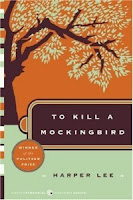 To Kill a Mockingbird
By Harper Lee
Confession: this was assigned in high school (of course, obviously) and I have no idea if I read it or not. YES, I SWEAR I AM AN AMERICAN. I had one of those English teachers (God bless him) who assigned both the book and the movie of everything. I remembered that it had a rabid dog, and a guy named Boo Radley, and that Atticus Finch was a sexy lawyer (that can't be right), and something happened that had to do with African Americans. Which is not really good enough.
So I read it again. Or maybe for the first time. I don't know. But here's what I do know: it's a goddamn good book. Why do we waste these books on prepubescent people? Most teenagers don't give a dog fart about books like To Kill a Mockingbird and Lord of the Flies, which I pretty much want to read every year of my life. Instead of making them read these books when they'd rather be reading Twilight (and let's face it, at least they're reading something) we should put the best books on the highest shelves and say, "Nuh uh. No way. Those are a secret." Build up a little mystery and intrigue so that someday they'll be in a bookstore, see a copy, and just DIE to start reading it, instead of thinking, "oh, that's that book my stupid teacher made me read."
This is obviously not really a review because everyone already mostly knows about To Kill a Mockingbird. But if you "read" it in high school and don't really remember reading it, it actually is as good as everyone says it is and you wouldn't be wasting your time to read it again. Particularly because, reading as an adult, Scout is charming in ways I wouldn't have appreciated as a teenager.
I would recommend this book to: Anyone who hasn't read it, obvi, and anyone who pretends like they've read it, but can't legitimately remember the plot. You might be on Jeopardy someday.
 The Immortal Life of Henrietta Lacks
By Rebecca Skloot
Between this, The Help, and To Kill a Mockingbird, I've had just about as many books as I can handle about the awful treatment of black people in this country. At least for a couple of months. The book tells the story of what happened when a doctor took a cell culture from a woman without her knowledge and it became one of the most, if not the most, important cell culture in medical history. It also tells the story of her family, who had no idea that an entire industry had arisen from their mother's cells.
The story has thousands of facets that make it intriguing: the historical implications of the mistreatment of black bodies, the story of the family itself living in poverty in rural Virginia, the science-fiction-like quality of the cells and their infinite replication, the (moral and religious?) questions about who owns our bodies and what responsibility do we have to science? This all probably sound very heavy and a little daunting, but Skloot is a talented story-telling and manages to take a story that has information coming from all angles and weave it into a coherent narrative. More than that, she really makes you care about the characters.
You know this is not your standard science book because, well, there's a good chance it will make you cry. I did. Hard.
I would recommend this book to: Jessica D. and people who like non-fiction books that have a plot.
 Battle Hymn of the Tiger Mother
By Amy Chua
(Audio Book)
This book could not be further from my scope of interest. It's a memoir by a woman who raised her two daughters, in America, according to strict "Chinese Mother" principles, and all of the resulting successes and failures both hilarious and terrifying. In strictly embracing Chinese parenting, she inherently critiques "Western Parents" who are both hovering and laissez-faire.
When the book was published a storm of controversy stirred around Chua because, in the book, her behavior seems, admittedly, a little crazy. She doesn't allow her daughters to have playdates or sleep-overs with friends, she makes them practice long hours, every day on their musical instruments, and in one in much-discussed incident in the book, she hotly rejects a birthday card from her daughter for not being good enough.
I wouldn't have wanted to live with her growing up. But here's what's interesting, unlike some crazy, nightmarish, overbearing parents, Chua is completely self-aware. I read an interview in TIME magazine (please do not quote me on this) where Chua stated that she intended the book to be funny and self-deprecating, and was shocked by the scandal it caused. Perhaps being armed with this foreknowledge changed my attitude toward the book.
Also, I "read" the audio edition, something I normally can't stand but was convinced to do by Vanity Fair's "Writers Reading" podcast, which featured a sample of Chua reading a sample of the work. In her own voice, it's easy to tell that Chua may be driven, but she's not a tyrant, and that she is interested, above all, in the well-being of her children, even when it means recognizing the faults in her strategy--which is something few people are willing to do.
Perhaps it's a bad sign for the quality of the writing that hearing the author's voice made her intentions so much clearer. Or maybe since I don't have children, I'm less invested in her craziness and more open to whatever she's got to say. One way or another, the book was intriguing and HIGHLY entertaining. Even if her method had some faults, Chua poses many valid and necessary arguments about the way we in the "West" relate to our children--even if you don't have one, you were one at some point.
I would recommend this book to: Any of my friends with children (Trina in particular), people who enjoy "crazy" behavior, and anyone who plays an instrument but is having a hard time getting motivated to practice. You will feel AWFUL for not practicing after reading this book.
To Kill a MockingbirdBy Harper Lee
Confession: this was assigned in high school (of course, obviously) and I have no idea if I read it or not. YES, I SWEAR I AM AN AMERICAN. I had one of those English teachers (God bless him) who assigned both the book and the movie of everything. I remembered that it had a rabid dog, and a guy named Boo Radley, and that Atticus Finch was a sexy lawyer (that can't be right), and something happened that had to do with African Americans. Which is not really good enough.
So I read it again. Or maybe for the first time. I don't know. But here's what I do know: it's a goddamn good book. Why do we waste these books on prepubescent people? Most teenagers don't give a dog fart about books like To Kill a Mockingbird and Lord of the Flies, which I pretty much want to read every year of my life. Instead of making them read these books when they'd rather be reading Twilight (and let's face it, at least they're reading something) we should put the best books on the highest shelves and say, "Nuh uh. No way. Those are a secret." Build up a little mystery and intrigue so that someday they'll be in a bookstore, see a copy, and just DIE to start reading it, instead of thinking, "oh, that's that book my stupid teacher made me read."
This is obviously not really a review because everyone already mostly knows about To Kill a Mockingbird. But if you "read" it in high school and don't really remember reading it, it actually is as good as everyone says it is and you wouldn't be wasting your time to read it again. Particularly because, reading as an adult, Scout is charming in ways I wouldn't have appreciated as a teenager.
I would recommend this book to: Anyone who hasn't read it, obvi, and anyone who pretends like they've read it, but can't legitimately remember the plot. You might be on Jeopardy someday.
The Immortal Life of Henrietta LacksBy Rebecca Skloot
Between this, The Help, and To Kill a Mockingbird, I've had just about as many books as I can handle about the awful treatment of black people in this country. At least for a couple of months. The book tells the story of what happened when a doctor took a cell culture from a woman without her knowledge and it became one of the most, if not the most, important cell culture in medical history. It also tells the story of her family, who had no idea that an entire industry had arisen from their mother's cells.
The story has thousands of facets that make it intriguing: the historical implications of the mistreatment of black bodies, the story of the family itself living in poverty in rural Virginia, the science-fiction-like quality of the cells and their infinite replication, the (moral and religious?) questions about who owns our bodies and what responsibility do we have to science? This all probably sound very heavy and a little daunting, but Skloot is a talented story-telling and manages to take a story that has information coming from all angles and weave it into a coherent narrative. More than that, she really makes you care about the characters.
You know this is not your standard science book because, well, there's a good chance it will make you cry. I did. Hard.
I would recommend this book to: Jessica D. and people who like non-fiction books that have a plot.
Battle Hymn of the Tiger MotherBy Amy Chua
(Audio Book)
This book could not be further from my scope of interest. It's a memoir by a woman who raised her two daughters, in America, according to strict "Chinese Mother" principles, and all of the resulting successes and failures both hilarious and terrifying. In strictly embracing Chinese parenting, she inherently critiques "Western Parents" who are both hovering and laissez-faire.
When the book was published a storm of controversy stirred around Chua because, in the book, her behavior seems, admittedly, a little crazy. She doesn't allow her daughters to have playdates or sleep-overs with friends, she makes them practice long hours, every day on their musical instruments, and in one in much-discussed incident in the book, she hotly rejects a birthday card from her daughter for not being good enough.
I wouldn't have wanted to live with her growing up. But here's what's interesting, unlike some crazy, nightmarish, overbearing parents, Chua is completely self-aware. I read an interview in TIME magazine (please do not quote me on this) where Chua stated that she intended the book to be funny and self-deprecating, and was shocked by the scandal it caused. Perhaps being armed with this foreknowledge changed my attitude toward the book.
Also, I "read" the audio edition, something I normally can't stand but was convinced to do by Vanity Fair's "Writers Reading" podcast, which featured a sample of Chua reading a sample of the work. In her own voice, it's easy to tell that Chua may be driven, but she's not a tyrant, and that she is interested, above all, in the well-being of her children, even when it means recognizing the faults in her strategy--which is something few people are willing to do.
Perhaps it's a bad sign for the quality of the writing that hearing the author's voice made her intentions so much clearer. Or maybe since I don't have children, I'm less invested in her craziness and more open to whatever she's got to say. One way or another, the book was intriguing and HIGHLY entertaining. Even if her method had some faults, Chua poses many valid and necessary arguments about the way we in the "West" relate to our children--even if you don't have one, you were one at some point.
I would recommend this book to: Any of my friends with children (Trina in particular), people who enjoy "crazy" behavior, and anyone who plays an instrument but is having a hard time getting motivated to practice. You will feel AWFUL for not practicing after reading this book.
Wednesday, September 21, 2011
Buenos Buenos
 |
| El Ateneo Bookstore |
A: Arrrrrrgentina.
Ohhhhhmahgah, I'm so funny.
But seriously. So we went to Buenos Aires this weekend and it was definitely the most fun thing that we've done since coming down here. In part because getting to Buenos Aires means taking a ferry boat called a Buque Bus which is both like and unlike every form of transportation I've ever taken before.
The ferries I've taken in the states (between Anacortes and the San Juan islands in Washington state, for instance) are always a little gusty and fairly soggy. The Buque bus is a legit way to travel... not just to get somewhere, but to travel. It's a three hour trip (a three hour tour?) and it goes between two countries, so you pass through customs on your way in and the boarding areas have duty-free shops and plush leather couches. The boat itself is divided into tourist class and first class, and really only differ a little. Both have large cushy seats, a full cafe, big windows overlooking the ocean, TVs that play a combination of American TV and ads for Argentinian fashion shows, and one or two noisy children. Neither has assigned seating so it's first come first served. First class has hostesses (Waitresses? Stewardesses?) in first class will bring you you order and pick up your tray, and there are slightly larger, but slightly less comfortable seats.
I've basically decided that I want to travel everywhere by boat from now on. It's way more laid back an comfortable than air travel and you never have to turn your iPod off or remove your shoes involuntarily.
 |
| The stage of El Ateneo Bookstore. |
I have three favorite bookstores: The Boulder Bookstore, which I love fiercely and maniacally and literally spend hours in--like a crazy hobo--every time I go home; Books Plus, inside The MLK Memorial Library in DC, where everything is $1-$2; and Capitol Hill Books, which is like a hobbit hole full of books and the owner, a former Naval Officer, puts ironic signs on the books and will yell at you if you say something stupid.
Now... El Ateneo, which occupies a former theater, could easily be added to this list... IF... oh if, I spoke Spanish.
Still and all, as you can see from these pictures, it's basically one of the most amazing places you could possibly put a bookstore. We went back three times. And we ate lunch at the café on the stage. Their selection of English books is sad, sad, sad (J.D. Robb much?). But I bought copies of The Hotel New Hampshire by John Irving and The Periodic Table by Primo Levi. (NB, I'm not saying that foreign bookstores should be required to carry English-language books, only that, if they choose to do so, they should pick a few books that don't have the author's name in raised neon letters on the cover.)
 |
| Recoleta Cemetery. |
Recoleta cemetery is like the cemeteries of New Orleans turned up to 11. In addition to the above-ground crypts, it's not unusual to peek through the glass door of the huge tombs and see underground vaults with old wooden coffins stacked up on shelves beneath the floor.
 |
| Yes, that's a child-size coffin. |
This is the cemetery where Evita Peron is buried, by the way. Just another box of famous bones.

Tuesday, September 20, 2011
My Laurels
Anyone want to hear a funny story? Remember how I graduated back in August?
Well actually I didn't.
Or I did. But I didn't until a week ago. If you can wrap your brain around that.
Here's what I know about what happened: On July 9, I submitted my application to graduate on August 31. Word on the street was that I had all my ducks in a row and all I had to do was rest on my figurative academic laurels.
Then round about September 3 I got an email from the head of the English Department that said, "Oh hey hi. Just keep in touch." And since I still hadn't received an email or a letter saying "YOU, GRADUATE, ARE A WINNER," I asked him what was up with my graduation and he said, "well actually, Idk. We can't find your folder."
Uh. wha?
My wha?
Can't wha?
So apparently someone in the office went on leave and like, hid my file under a bushel or something and even though only ONE step needed to be completed in my graduation application (i.e., it needed to be approved by the English Department) and someone could have just asked me what was up, or, you know, looked online, no one contacted me or let me know what was happening (which was nothing).
So all I needed to do was tell the department head, "Yes, I'm done," and he approved my application and it got pushed through to the Grad School to be finalized. That's it. Why didn't anyone call or email me, oh, I don't know, in JULY or AUGUST? There are only like 13 people in our program. We can't be that difficult to keep track of.
But since I was eventually contacted and they worked out and were nice about it, that part's not really so bad. The person who usually handles these things is on leave. That's understandable.
What really bothers me is the way the school, Georgetown itself, communicates with its students. When I contacted the Grad School if they had gotten my graduation application, I got back an anonymous reply that said "check your online account in a week." Since my online account has about 75 things in it and none of them say "graduation status," I asked where to look and was told, "check your transcript."
Now.... Georgetown is a very expensive school with lots of famous alumni and large endowments. Are you telling me that they can't afford an email, as a courtesy, to let you know that you've graduated? Or, on a related note, letting you know something has gone wrong with your graduation? We have no faculty advisers so it would be great if just one person on the staff paid some attention to whether people were actually graduating or not. And to whether the school was behaving courteously towards its students, who are, after all, also paying customers.
Anyway. After two months of wondering, since there's no clear place to check, and no one on the staff with whom to communicate, I am pleased to be able to say that my online transcript now has a retroactive graduation date of August 31: I magically graduated 3 days before I found out I had not actually graduated.
Congratulations to me.
Well actually I didn't.
Or I did. But I didn't until a week ago. If you can wrap your brain around that.
Here's what I know about what happened: On July 9, I submitted my application to graduate on August 31. Word on the street was that I had all my ducks in a row and all I had to do was rest on my figurative academic laurels.
Then round about September 3 I got an email from the head of the English Department that said, "Oh hey hi. Just keep in touch." And since I still hadn't received an email or a letter saying "YOU, GRADUATE, ARE A WINNER," I asked him what was up with my graduation and he said, "well actually, Idk. We can't find your folder."
Uh. wha?
My wha?
Can't wha?
So apparently someone in the office went on leave and like, hid my file under a bushel or something and even though only ONE step needed to be completed in my graduation application (i.e., it needed to be approved by the English Department) and someone could have just asked me what was up, or, you know, looked online, no one contacted me or let me know what was happening (which was nothing).
So all I needed to do was tell the department head, "Yes, I'm done," and he approved my application and it got pushed through to the Grad School to be finalized. That's it. Why didn't anyone call or email me, oh, I don't know, in JULY or AUGUST? There are only like 13 people in our program. We can't be that difficult to keep track of.
But since I was eventually contacted and they worked out and were nice about it, that part's not really so bad. The person who usually handles these things is on leave. That's understandable.
What really bothers me is the way the school, Georgetown itself, communicates with its students. When I contacted the Grad School if they had gotten my graduation application, I got back an anonymous reply that said "check your online account in a week." Since my online account has about 75 things in it and none of them say "graduation status," I asked where to look and was told, "check your transcript."
Now.... Georgetown is a very expensive school with lots of famous alumni and large endowments. Are you telling me that they can't afford an email, as a courtesy, to let you know that you've graduated? Or, on a related note, letting you know something has gone wrong with your graduation? We have no faculty advisers so it would be great if just one person on the staff paid some attention to whether people were actually graduating or not. And to whether the school was behaving courteously towards its students, who are, after all, also paying customers.
Anyway. After two months of wondering, since there's no clear place to check, and no one on the staff with whom to communicate, I am pleased to be able to say that my online transcript now has a retroactive graduation date of August 31: I magically graduated 3 days before I found out I had not actually graduated.
Congratulations to me.
Monday, September 12, 2011
El Moo.
 Yesterday was a strange and interesting day.
Of course, I've blasphemed Uruguay by calling it boring, which I still mostly think it is, but yesterday we found something fun to do. This month they're having something called "Expo Prado" in what is basically their version of Central Park. It's like a giant stock show that lasts for an entire month.
 When we got there we were starving, which was good because there was a restaurant right inside the gates and bad because it was an utterly bizarre eating experience.
 1. About five minutes after bringing our bread, before I could eat any, the waiter took it away from us and dumped it into the basket of the table next to us without saying a word.
2. The waiter seemed deeply offended when he asked what we wanted and we didn't know because no one had ever given us menus.
3. No one would bring me a fork. Which was kind of ok because,
4. The food was completely inedible. The smoked animal carcases cooking outside looked and smelled like a good sign, but what we got was bones and fat that smelled and tasted, somehow, like fish. Bad. Bad. Bad. Bad.
 After the dining hiccup the rest of the day was a lot of fun. I'm not sure I've mentioned that the two things Uruguay is most famous for and most proud of are their dulce de leche and their beef. All of the beef here is grass-fed, which is not hard to imagine since most of the population lives in the capitol and the rest of the country seems to be wide open grassland. Dulce de Leche, caramel, on the same note, is made from milk or cream and sugar--so it makes sense that they're very excited about their cows.
 I've been to the stock show in Denver enough times that I had some preconceived notions about what to expect, and I was mostly wrong. All of the same pieces were there: livestock, ranch and farm equipment (they had some really nice chutes, which Tim referred to as "hug machines"--this is how I know he belongs in my family), cowboys/Gauchos, horse sports, and fair food. All of the pieces, however, were distinctly South American.
Gauchos were sitting with them, smoking and chatting with people who came up and petted them (petted the bulls, not petted the gauchos).
 And there were so. many. people. It was like being in the pit at a concert, not being in a large building full of sleepy bovinos. The entire fair ground was shoulder-to-shoulder packed with people, which, if I was a bull, being patted on the face all day by all those people, I might find a little upsetting. Maybe they were sedated? Maybe Uruguayan cattle are just way less stressed than the Denver stock show cattle because all they do is eat grass and hang out with their Gauchos all day?
 Anyway after petting all the bovinos we discovered that there was also a steeplechase going on that day, so we stood and watch horses jump over walls that were taller than I am and it was insane and terrifying. Any sort of activity where horses jump or run always terrifies me because I worry about their tiny horsey ankles. Please don't ask me why.
Before going in to visit the Ovinos (sheep) we bought and devoured some amazing churros. You can also get them relleno with dulce de leche, but we just got them plain. They tasted like they'd been deep-fried in salted butter and then sprinkled in both salt and sugar. It. was. amazing.
 The sheep were less interesting than the cows, but sheep always are. Except the baby sheep or the ones that are close enough to pet.
Afterwards, and after being nearly crushed to death by the throng of people in the "Brazil" booth who were trying to the get to the chocolate fountain, we headed home and decided to take the bus. Public transit in other countries (even just in other cities) is always an adventure. Like everywhere else in Uruguay there was classic rock playing the whole time and the bus itself was actually nicer than many of the buses in DC. Can't beat that.
Thursday, September 08, 2011
War, Freak Shows, and other First Date Ideas.
It's nice being in a foreign country and having nothing to do. I'm almost caught up on my book reviews. Or actually, not really at all. Because I also keep reading. But whatever. I'm probably not going to review the book I'm currently reading because it's written by my Grandmother and it's not yet published, but when it hits the shelves I'll tell you allll about it (it's freaking amazing). Still while I read that I've been listening to audio books (not simultaneously), which is something I've never liked but am working on. Anyway... moving on.
 Geek Love
By Katherine Dunn
Oh the mysterious pleasures of the freak show! I know about Katherine Dunn because she wrote a non-fiction collection of essays about boxing that I used in my oral exam. That book and this book could not be more different in every way except to say that they are both supremely well written and they never flinch or shy away from the nitty gritty.
This book is not about gamers or computer nerds who fall in love and experience ennui because they can only really interact through their much more attractive avatars. I'm sure that book is out there somewhere; maybe it's "Nerd Love." This book is about a carnival worker/owner and his wife who experiment with all kinds of drugs and chemicals in order to breed their own traveling freak show. If that doesn't sound at least a little bit interesting to you, we have nothing further to talk about. The story is then mostly about the family and their crazy bodies and minds and their interactions with the "norms" around them, including the cult that follows Binewski's Carnival Fabulon all over the country.
A great deal of the power and appeal of this book is in its dreamy and fantastical language. For instance Chapter 8, "Educating the Chick," begins,
I would recommend this book to: Kacie, Jessica R. and Jessica D. I'm sure my mom would like it too.
 Matterhorn: A Novel of the Vietnam War
By Karl Marlantes
I cannot say for sure, but I imagine that this book is a fairly accurate representation of the Vietnam war. At least the sensation of reading it, or the first half of it, is. You sort of slog around in it doing nothing for a while, and then things are hectic and violent and scary and gory and then they're kind of boring again for awhile until things start blowing up again, when it's both exhilarating and frustrating. Like war itself there's not really a plot and it goes on for a very, very long time.
That doesn't sound very good does it? In truth, it was actually a pretty good book and I generally can't focus on books or shows about war for more than ten minutes at a stretch.
The book follows a portion of Sgt. Waino Melas' first tour of duty in Vietnam and is taken in part from the real-life experiences of the author, a decorated veteran. The book takes the time to explore in-depth the issues that plagued the marines in Vietnam: politics, bureaucracy, racial tension, grotesque health problems, fear, insecurity, hunger, lonliness, and on and on and on and on. Marlantes does a great job putting a human face on these issues and explaining to hippies like me why someone--lots of someones--would persist in such a seemingly godawful job.
I would recommend this book to: Tim and other people who like history, war, and books that have no female characters.
 The Daughter of Time
By Josephine Tey
Ok, actually, I don't have a lot to say about this book. It's a historical murder mystery. An injured man looking for something to do stumbles on the idea that Richard III did not actually murder his two nephews in the tower of London and sets out (metaphorically speaking, because he's immobilized in a hospital bed) to find the truth. It looks as though Tey has written a history book with a plot wrapped around it, but the editors haven't taken the time to include an afterword that explains if this is so. And the book wasn't heart-racing enough to inspire me to go to Google and look it up and find out. For all the times this book has been recommended to me it's mostly Meh.
I would recommend this book to: people who like historical fiction? And mysteries? Those are the kind of people who recommended it to me.
Geek LoveBy Katherine Dunn
Oh the mysterious pleasures of the freak show! I know about Katherine Dunn because she wrote a non-fiction collection of essays about boxing that I used in my oral exam. That book and this book could not be more different in every way except to say that they are both supremely well written and they never flinch or shy away from the nitty gritty.
This book is not about gamers or computer nerds who fall in love and experience ennui because they can only really interact through their much more attractive avatars. I'm sure that book is out there somewhere; maybe it's "Nerd Love." This book is about a carnival worker/owner and his wife who experiment with all kinds of drugs and chemicals in order to breed their own traveling freak show. If that doesn't sound at least a little bit interesting to you, we have nothing further to talk about. The story is then mostly about the family and their crazy bodies and minds and their interactions with the "norms" around them, including the cult that follows Binewski's Carnival Fabulon all over the country.
A great deal of the power and appeal of this book is in its dreamy and fantastical language. For instance Chapter 8, "Educating the Chick," begins,
"A carnival in daylight is an unfinished beast, anyway. Rain makes it a ghost. The wheezing music from the empty motionless rides in a soggy, rained-out afternoon midway almost hits my chest with a sweet ache. The colored dance of the lights in the seeping air flashed the puddles in the sawdust with an oily glamor."I love a book with a saucy dash of magical realism and with interesting characters who can be unusual and mundane at the same time.
I would recommend this book to: Kacie, Jessica R. and Jessica D. I'm sure my mom would like it too.
 Matterhorn: A Novel of the Vietnam War
By Karl Marlantes
I cannot say for sure, but I imagine that this book is a fairly accurate representation of the Vietnam war. At least the sensation of reading it, or the first half of it, is. You sort of slog around in it doing nothing for a while, and then things are hectic and violent and scary and gory and then they're kind of boring again for awhile until things start blowing up again, when it's both exhilarating and frustrating. Like war itself there's not really a plot and it goes on for a very, very long time.
That doesn't sound very good does it? In truth, it was actually a pretty good book and I generally can't focus on books or shows about war for more than ten minutes at a stretch.
The book follows a portion of Sgt. Waino Melas' first tour of duty in Vietnam and is taken in part from the real-life experiences of the author, a decorated veteran. The book takes the time to explore in-depth the issues that plagued the marines in Vietnam: politics, bureaucracy, racial tension, grotesque health problems, fear, insecurity, hunger, lonliness, and on and on and on and on. Marlantes does a great job putting a human face on these issues and explaining to hippies like me why someone--lots of someones--would persist in such a seemingly godawful job.
I would recommend this book to: Tim and other people who like history, war, and books that have no female characters.
The Daughter of TimeBy Josephine Tey
Ok, actually, I don't have a lot to say about this book. It's a historical murder mystery. An injured man looking for something to do stumbles on the idea that Richard III did not actually murder his two nephews in the tower of London and sets out (metaphorically speaking, because he's immobilized in a hospital bed) to find the truth. It looks as though Tey has written a history book with a plot wrapped around it, but the editors haven't taken the time to include an afterword that explains if this is so. And the book wasn't heart-racing enough to inspire me to go to Google and look it up and find out. For all the times this book has been recommended to me it's mostly Meh.
I would recommend this book to: people who like historical fiction? And mysteries? Those are the kind of people who recommended it to me.
Subscribe to:
Posts (Atom)